Study Strategy
Dec 5, 2025
How to Turn Notes Into Quizzes Using AI (Step-by-Step Guide)
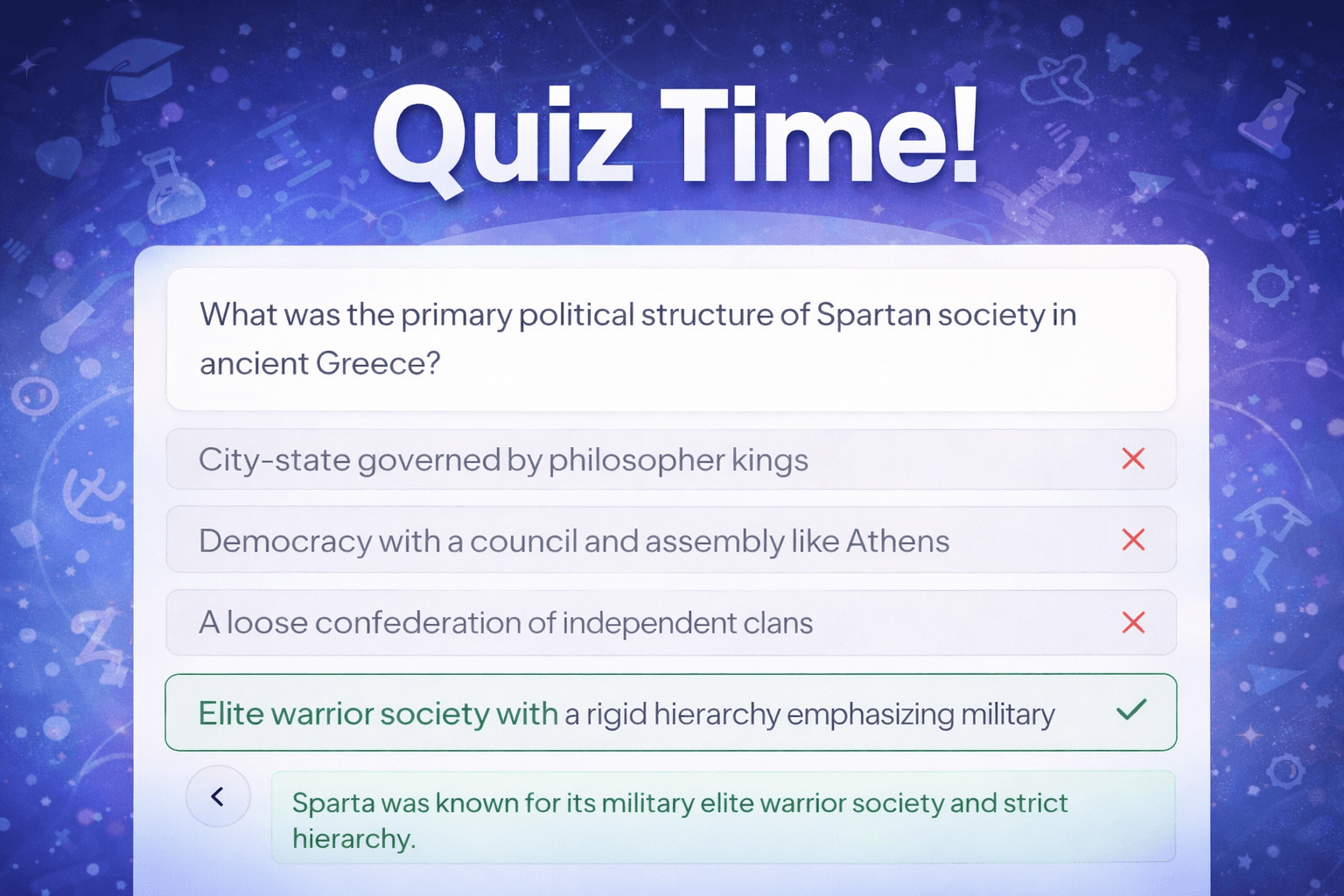
Studying from notes sounds productive but rereading pages of text rarely leads to real understanding. Most students don’t struggle because they lack notes. They struggle because they don’t actively test themselves.
That’s where AI changes everything. Today, students can turn notes into quizzes instantly using AI, transforming passive study material into active practice questions that actually improve memory and exam performance.
In this step-by-step guide, you’ll learn:
Why quizzes work better than rereading notes
How AI converts notes into quiz questions
What types of notes work best
How students use tools like Curio to create quizzes from notes, PDFs, and videos in minutes
Why Turning Notes Into Quizzes Works (Backed by Science)
Most students study like this:
Read notes
Highlight text
Re-read before exams
The problem? This is passive learning.
Research consistently shows that active recall, forcing your brain to retrieve information, is far more effective than rereading. Quizzes do exactly that.
When you turn notes into quizzes:
You identify what you don’t know
You strengthen memory through recall
You retain information longer
You prepare for exam-style questions
That’s why practice tests outperform note review, and why converting notes into quizzes is one of the fastest ways to improve scores.
What Does “Turn Notes Into Quizzes Using AI” Actually Mean?
An AI quiz generator analyzes your study material and automatically creates questions from it. Instead of manually writing questions, AI:
Identifies key concepts
Extracts facts, definitions, and relationships
Converts them into quiz questions
With modern AI study tools, you can convert:
Class notes
PDFs and textbooks
Lecture slides
YouTube videos
Study guides
into quizzes in seconds.
Step-by-Step: How to Turn Notes Into Quizzes Using AI
Step 1: Gather Your Study Material
Start with the material you already have:
Typed notes (Google Docs, Word, Notion)
PDFs or textbook chapters
Lecture slides
Video links (recorded lectures, YouTube)
You don’t need perfectly organized notes. AI tools work even with messy or unstructured content.
Step 2: Upload or Paste Notes Into an AI Study Tool
Choose an AI study app that supports quiz generation from notes.
With tools like Curio, you can:
Paste text directly
Upload PDFs
Add links to YouTube videos
Combine multiple sources into one study session
The AI reads your content and prepares it for question generation.
Step 3: Let AI Convert Notes Into Quiz Questions
Once your notes are uploaded, the AI automatically generates questions based on:
Key definitions
Important facts
Cause-and-effect relationships
Exam-relevant concepts
Good AI quiz generators don’t just create random questions, they create exam-style questions aligned with how students are tested.
Curio, for example, generates official-style practice questions rather than generic trivia.
Step 4: Practice Active Recall With the Quiz
Now comes the most important part: using the quiz properly.
When answering:
Don’t look at your notes
Answer honestly, even if unsure
Treat it like a real test
This forces your brain to retrieve information, strengthening memory far more than rereading.
Step 5: Review Weak Areas and Regenerate Quizzes
One of the biggest advantages of AI quizzes is adaptability.
After completing a quiz:
Identify weak topics
Regenerate new questions focused on those areas
Increase difficulty as you improve
Curio does this automatically by tracking performance and generating questions based on your weak spots, something static quizzes can’t do.
What Types of Notes Work Best for AI Quizzes?
AI can turn almost any notes into quizzes, but these formats work especially well:
✔ Structured Notes
Bullet points
Headings and subtopics
Definitions and examples
✔ Lecture Slides & PDFs
AI extracts key concepts easily
Great for exam-heavy subjects
✔ Video Lectures
AI converts spoken explanations into questions
Ideal for recorded classes or YouTube learning
Even unstructured notes still work, AI tools simply organize them before generating quizzes.
Common Mistakes Students Make When Turning Notes Into Quizzes
❌ Using quizzes only once
Quizzes should be repeated. Spaced repetition matters.
❌ Treating quizzes like revision, not testing
Looking at notes while answering defeats the purpose.
❌ Using generic question banks
Pre-made questions don’t match your notes or syllabus.
❌ Not focusing on weak areas
The biggest gains come from targeting what you get wrong.
AI tools fix these problems by personalizing quizzes automatically.
AI Quizzes vs Manual Question Writing
Manual Quizzes | AI-Generated Quizzes |
|---|---|
Time-consuming | Instant |
Limited questions | Unlimited variations |
Often shallow | Concept-focused |
Hard to personalize | Adaptive to weak spots |
For busy students preparing for exams, AI quizzes simply scale better.
Who Benefits Most From Turning Notes Into Quizzes Using AI?
This method works especially well for:
High school students preparing for SAT and other exams
College students with heavy reading loads
Competitive exam aspirants (SAT, NEET, CA, GRE)
Self-learners using online videos and courses
If your exam tests understanding, not memorization, AI quizzes give you a clear advantage.
Why Students Use Curio to Turn Notes Into Quizzes
Students choose Curio because it:
Turns notes, PDFs, and videos into quizzes instantly
Generates exam-style questions, not generic ones
Adapts to weak areas automatically
Replaces passive study with active learning
Instead of rereading notes, students practice smarter and faster.
Stop Rereading, Start Testing
If you’ve been spending hours rereading notes with little improvement, the problem isn’t your effort, it’s your method.
When you turn notes into quizzes using AI, you:
Study actively
Learn faster
Retain information longer
Prepare more effectively for exams
AI doesn’t replace studying, it upgrades it.
Want to Try It Yourself? Upload your notes and generate your first quiz in minutes with Curio, the AI study app built for real exams.
Frequently Asked Questions: Turning Notes Into Quizzes Using AI
❓ How do you turn notes into quizzes using AI?
You can turn notes into quizzes by uploading or pasting your study material into an AI quiz generator. The AI analyzes key concepts and automatically converts notes, PDFs, or videos into practice questions in minutes.
❓ Can AI convert notes into exam-style questions?
Yes. Advanced AI quiz generators create exam-style questions by analyzing how concepts are tested. This makes them especially useful for exams like SAT, NEET, CA, and GRE.
❓ What types of notes can be turned into quizzes?
AI tools can convert typed notes, PDFs, lecture slides, study guides, and recorded or YouTube lectures. Even unorganized notes work, as AI structures the content before generating quizzes.
❓ Are AI-generated quizzes effective for studying?
Yes. AI-generated quizzes promote active recall, which helps students retain information longer, identify weak areas faster, and prepare more effectively than rereading notes.
❓ Is it better to use quizzes or flashcards for studying?
Both are useful. Flashcards help memorize facts, while quizzes test understanding and application. Many students use AI tools that generate both from the same notes.
❓ Do notes need to be well organized for AI quizzes?
No. AI quiz generators can work with messy or incomplete notes, though structured notes may produce clearer questions.
❓ Can AI quizzes replace traditional studying?
No. AI quizzes improve studying by turning passive review into active practice. Most students combine quizzes with brief review sessions for best results.
❓ Is it free to turn notes into quizzes with Curio?
Yes. Students can try turning notes into quizzes with Curio for free, with optional upgrades for advanced and exam-specific features.
❓ How often should I practice AI-generated quizzes?
Practice quizzes soon after creating them, repeat them over several days, and generate new quizzes focused on weak topics to improve long-term retention.
❓ Can AI generate quizzes for exams like SAT or GRE?
Yes. AI study apps like Curio generate quizzes tailored to specific exams, matching format, difficulty, and tested concepts.