Expert Reviewed
Nov 5, 2025
Digital SAT vs. Paper SAT: Which Is Right for You (2025)

The SAT Is Changing, But What Does It Mean for You?
If you plan to take the SAT in 2025 or later, you have probably heard that the traditional paper test is being replaced by the new Digital SAT. This change marks one of the biggest updates in the SAT’s history, and it raises a key question for students: What is the difference between the two formats, and which one is better for me?
Both versions measure the same reading, writing, and math skills, but they differ in structure and experience. The Digital SAT is shorter, adaptive, and taken on a device, while the Paper SAT follows a fixed sequence of questions.
Understanding these differences helps you choose the right preparation method. Tools like Curio make the transition easier by offering adaptive practice and personalized study sessions designed for the digital format.
What Is the Digital SAT?
The Digital SAT is a modern, computer-based version of the test that officially replaces the paper format in the United States starting in 2025.
Instead of one long, linear test, it uses an adaptive design with two modules per section: Reading and Writing, and Math. Your performance on the first module affects the difficulty of the second. This makes the test more efficient and better tailored to your ability.
The digital version lasts 2 hours and 14 minutes, nearly an hour shorter than the old paper test. It also includes on-screen tools such as a calculator, timer, and annotation features. Students take it on a laptop, tablet, or school-issued device.
The main goal of this redesign is to make the SAT faster, more flexible, and a better measure of each student’s true performance.
What Is the Paper SAT?
The Paper SAT was the standard format for decades. It is a fixed, non-adaptive test where every student answers the same set of questions.
This version takes about three hours, is taken on paper booklets, and uses multiple-choice bubbles for scoring. Some international centers still offer it temporarily, but it will be fully phased out after 2024.
While some students prefer the feel of writing by hand or using physical scratch paper, all U.S. test centers now use the digital version exclusively.
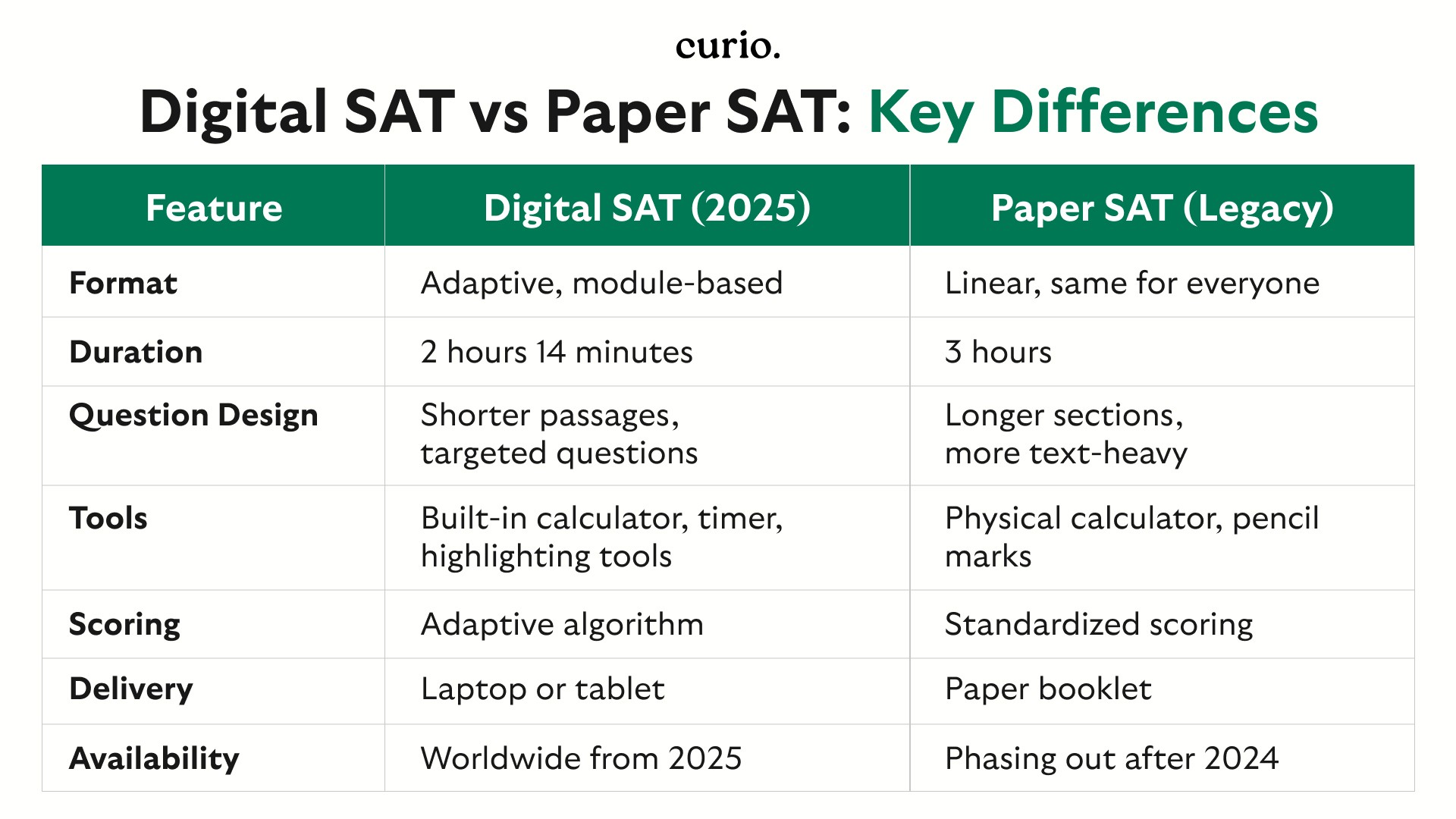
For example, the Digital SAT includes about 30% fewer questions, 98 total compared to 154 on the Paper SAT. Reading passages are much shorter, roughly 100 words versus 500–750 per section on paper. Math sections allow calculator use throughout, whereas the Paper SAT required no calculator for one Math section.
The biggest change is adaptivity. The Digital SAT adjusts its difficulty as you answer questions, creating a more personalized and efficient testing experience.
Which Format Is Right for You?
In 2025, almost all students will take the Digital SAT, but understanding your preferences still matters.
If you are comfortable with technology and prefer shorter, more interactive tests, the digital version will feel natural. If you like to annotate by hand and use a pencil, the paper format might seem more comfortable. However, as the transition completes, digital preparation is the smarter long-term choice.
The most important step is to practice in the same environment you will test in. Taking online mock exams and practicing on a laptop or tablet will help you build the focus and familiarity needed for digital testing.
How to Prepare for the Digital SAT
Preparing for the digital format requires a new approach. Traditional study guides and printed drills do not fully reflect the real test experience. Instead, focus on adaptive practice that adjusts to your progress and builds digital familiarity.
Practice in a Digital Environment
Take mock exams through the College Board’s Bluebook App to experience the actual interface. Train your eyes and mind to handle the digital layout comfortably.
Study with Adaptive Tools
Use study platforms that mimic the adaptive design of the real SAT. Curio, for example, creates dynamic quizzes that adjust in real time to your ability level. As you improve, your simulated SAT score updates automatically, showing measurable growth.
Focus on Short, Targeted Study Sessions
Digital study fatigue is real. Instead of long study marathons, schedule shorter sessions (30–45 minutes) with breaks between them. This builds consistency and better retention.
Pros and Cons of the Digital SAT
Advantages
The new format is faster and delivers results in just a few days. The adaptive structure makes questions more relevant to each student’s level, and on-screen tools make problem-solving easier. The shorter duration also reduces fatigue.
Challenges
Some students may find digital testing less comfortable at first. Screen fatigue, device issues, or distraction from the digital timer can cause stress. However, consistent practice on digital platforms minimizes these issues quickly.
When Will the Paper SAT End?
By 2025, all SAT test centers in the United States will offer only the Digital SAT. The paper format will remain available only for approved accommodations and limited technical exceptions.
This shift is part of a global modernization effort by the College Board to make testing faster, more secure, and more accessible worldwide.
Tips for Transitioning from Paper to Digital Prep
Start by incorporating small changes into your routine. Practice short quizzes online before taking full-length digital tests. Use your test-day device for practice to build confidence.
Mix reading, writing, and math questions in each study session to stay mentally fresh. Gradually, the digital interface will feel natural, and you’ll be better prepared for test day.
The Future of the SAT Is Digital
The move from paper to digital testing is not just about technology; it’s about a smarter, fairer approach to measuring student ability. Both versions of the SAT test the same core skills, but the Digital SAT offers a more efficient and personalized experience.
Preparing in a digital format now will help you feel confident and ready when you sit for the test. With Curio’s adaptive SAT prep, you can study in a system built for the modern SAT experience. It tracks your progress, builds personalized quizzes, and helps you master every section through consistent, targeted learning.
The SAT is evolving, and with the right preparation, you can evolve with it.
Frequently Asked Questions
What is the main difference between the Digital SAT and Paper SAT?
The digital version is shorter, adaptive, and taken on a computer. The paper version was longer and followed a fixed format.
Is the Digital SAT harder than the Paper SAT?
No, the difficulty is comparable. The adaptive design simply tailors questions to your ability, providing a more accurate measure of your skill level.
How can I get used to the digital format?
Practice with online tests, especially through the Bluebook App, and use adaptive study tools like Curio to simulate the experience.